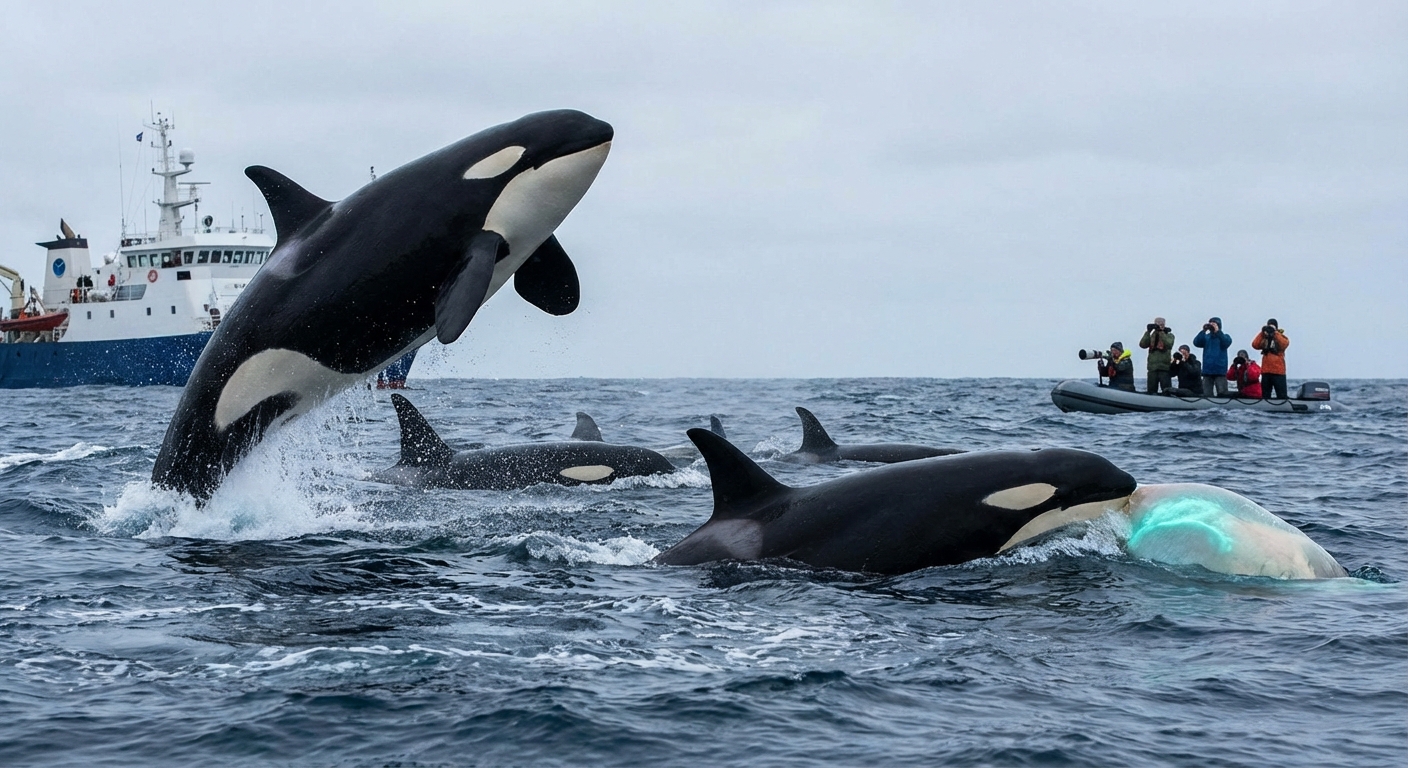
The Mystery Unfolding in the Ocean
For decades, marine biologists have observed orca behavior with meticulous detail. They've documented hunting strategies, social hierarchies, and migration patterns. But lately, something entirely different is happening—something that has even the most seasoned researchers scrambling for answers.
"We've never seen this before," admits Dr. John Towers, a leading cetacean researcher at OrcaLab, his voice carrying a mixture of fascination and genuine concern. And when a scientist with 30 years of experience utters those words, it's worth paying attention.
The Behavior Nobody Expected
In recent years, a specific population of orcas—primarily off the coast of the Pacific Northwest—has begun exhibiting behavior that defies conventional understanding. These highly intelligent marine mammals have started deliberately targeting and disabling fishing vessels in ways that appear almost... calculated.
It started with a few isolated incidents. A boat's rudder damaged here, an engine disabled there. But as the months turned into years, the pattern became impossible to ignore. What began as curiosity has evolved into something more deliberate, more coordinated, and frankly, more unsettling.
The incidents aren't random. They're concentrated. They're recurring. And most troublingly, they seem to be spreading among the orca population like a learned behavior.
Why This Matters More Than You Think
The implications are staggering. Orcas are already considered one of the ocean's most intelligent species—they possess complex social structures, teach their young, and demonstrate problem-solving abilities that rival some primates. But what researchers are witnessing now suggests something far more sophisticated.
These orcas appear to be communicating this behavior to one another.
Younger orcas are learning from older members of the pod. The technique is being refined. The success rate is climbing. This isn't instinct. This is culture. This is knowledge transfer. This is, in the most unsettling sense, a coordinated response to something.
The Question Nobody Wants to Ask
What triggered this shift? Some researchers point to overfishing and declining salmon populations. Others suggest it's a response to specific boats or fishing practices. A few brave scientists whisper about something darker—that these orcas might be deliberately seeking revenge for years of captivity, research interference, or environmental degradation.
The truth is: we don't know. And that uncertainty is precisely what makes this phenomenon so compelling.
The Ripple Effect
What started as a Pacific Northwest anomaly is now being documented in other regions. Orca populations in European waters have begun showing similar behavioral patterns. The phenomenon is expanding. The frequency is increasing. And our understanding remains frustratingly incomplete.
Fishing communities are on edge. Marine researchers are reexamining decades of data. And somewhere in the deep ocean, orcas are communicating in frequencies we can barely detect, orchestrating behaviors we barely understand.
The Bigger Picture
This situation forces us to confront an uncomfortable reality: we share this planet with species whose intelligence and complexity we're only beginning to comprehend. We've long assumed we understand the ocean and its inhabitants. These orcas are proving us wrong.
Whether this behavior represents adaptation, communication, or something we lack the vocabulary to describe, one thing is certain—the marine world is changing. And we're only now starting to pay attention.
The researchers continue their observations. The orcas continue their mysterious activities. And the gap between what we know and what we don't know keeps growing wider.