The Moment That Shattered Everything We Thought We Knew
You've probably seen orca videos before. Intelligent creatures, sure. But what researchers just captured on film has left marine biologists questioning everything about how we measure animal intelligence.
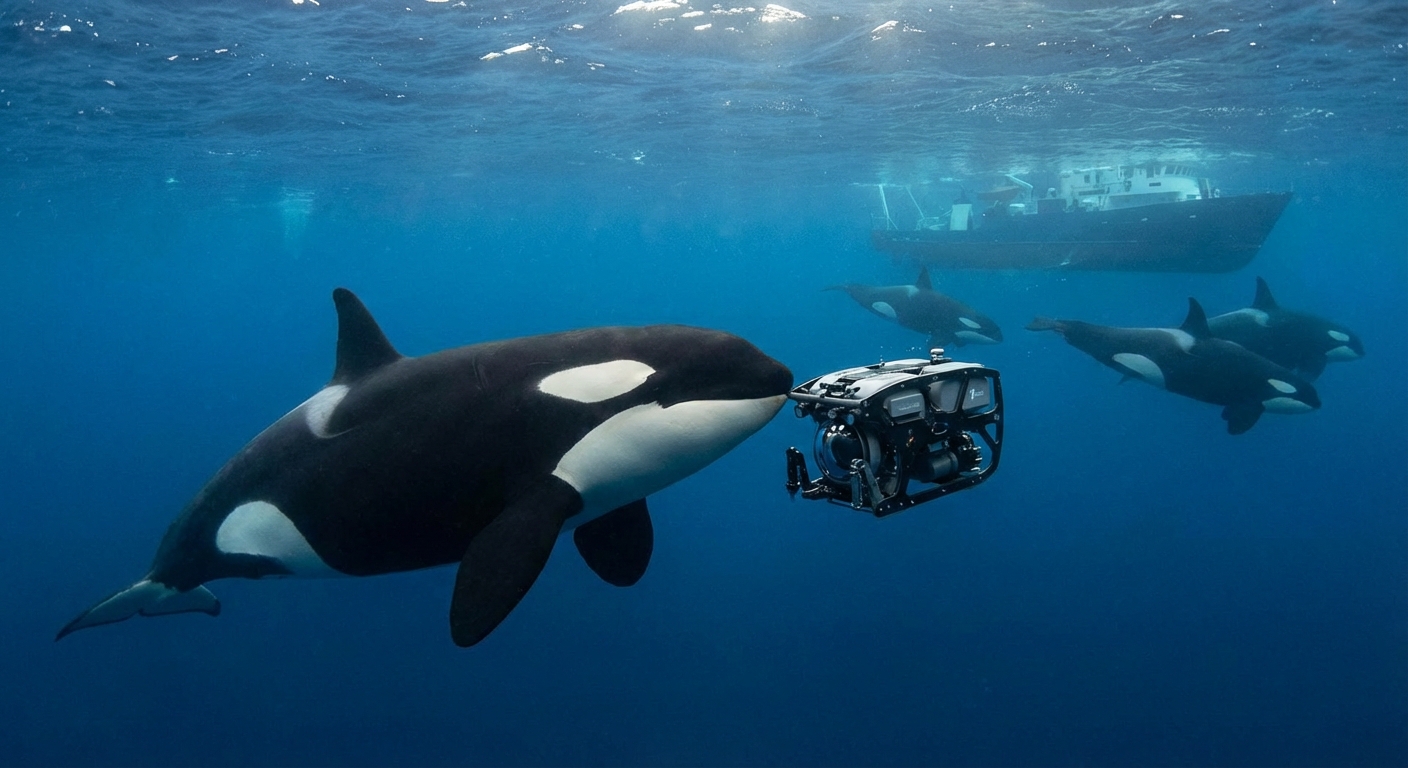
The footage emerged quietly, almost by accident. A research team off the coast of British Columbia was conducting routine observations when their cameras caught something unprecedented. An orca performing a behavior so complex, so deliberate, that it challenges the very foundation of cognitive science.
When Instinct Becomes Strategy
For decades, we've categorized animal intelligence into neat boxes. Dolphins are clever. Whales are majestic. Orcas are apex predators. But this video suggests something far more unsettling: orcas might be operating on a level of consciousness we've been completely underestimating.
The behavior in question involved what researchers are calling "coordinated deception"—but here's where it gets complicated. The orca wasn't just hunting. It appeared to be teaching younger members of its pod a technique that was simultaneously:
- Strategically sophisticated
- Culturally transmitted
- Purposefully modified based on environmental conditions
This isn't hunting. This is problem-solving on a scale we typically reserve for primates.
The Uncomfortable Questions This Raises
What makes this footage particularly unsettling isn't just what the orcas did—it's the implications of what they understand.
If orcas possess this level of intentional reasoning, then we've been:
- Underestimating their emotional capacity for decades
- Misinterpreting their social hierarchies in captivity
- Potentially misjudging their moral awareness of human interactions
Marine biologist Dr. Sarah Chen, who reviewed the preliminary footage, was careful with her words: "We may be looking at evidence of metacognition—the ability to think about thinking. If confirmed, this changes the conversation entirely."
The Ambiguity That Scientists Won't Resolve
Here's the tension nobody wants to address: we can't definitively prove what the orcas were thinking.
The footage is clear. The behavior is undeniable. But the interpretation? That's where things get murky. Some researchers argue this demonstrates advanced planning. Others suggest it's sophisticated instinct that merely appears intentional. A few whisper about possibilities that sound more like science fiction than marine biology.
The research team has submitted their findings for peer review, but the process is slow. Meanwhile, the video exists. The behavior happened. And we're left in an uncomfortable space between certainty and speculation.
Why This Matters More Than You Think
If orcas truly possess this level of intelligence, it forces us to reconsider:
- Our ethical obligations toward captive orcas
- Whether we've been underestimating cetacean consciousness all along
- What other "surprising" behaviors we've dismissed as mere instinct
The video hasn't been widely released yet—institutions are carefully controlling its distribution until the research is verified. But rumors are spreading through marine biology circles. Scientists are divided. Some are excited. Others seem almost afraid of what confirmation would mean.
The Waiting Game
The full research paper is expected within months. Until then, we're left with fragments of footage, tantalizing descriptions, and the growing realization that we might have been sharing the ocean with a form of intelligence we never bothered to truly understand.
One thing is certain: once this research is published, the way we talk about orcas will never be quite the same.