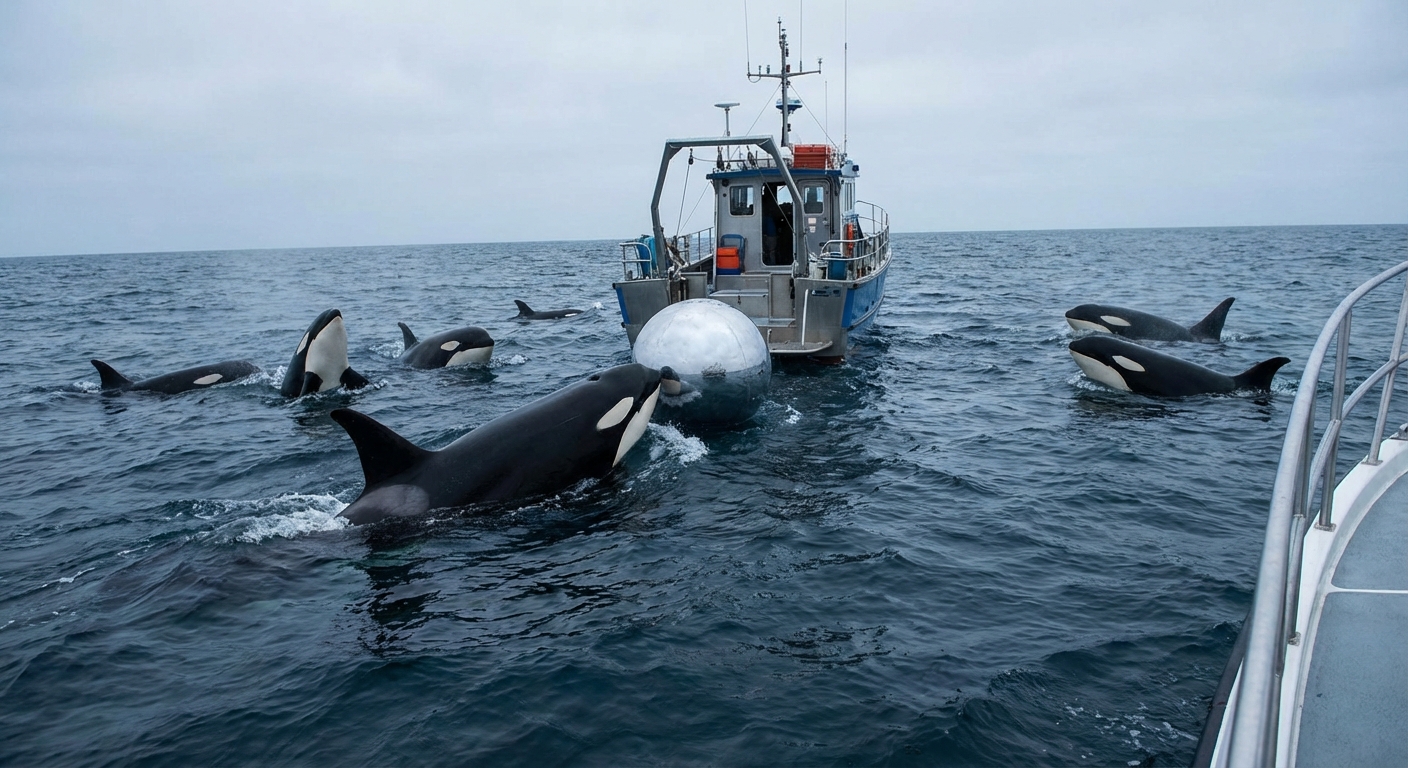
The Mystery That Left Marine Biologists Speechless
For over a decade, Dr. Sarah Mitchell's research team had documented every nuance of orca behavior in the Pacific Northwest. They knew their subjects intimately—the hunting patterns, the social hierarchies, the intricate communication systems that made these apex predators the ocean's most intelligent hunters.
Then, something changed.
When Routine Shatters
In the summer of 2022, the research team noticed something that shouldn't have been possible. The orcas they'd been tracking for years—a pod they'd named the "Northern Residents"—began exhibiting behavior that contradicted everything marine biologists understood about cetacean intelligence.
"At first, we thought it was a data error," Mitchell recalled in an interview. "We triple-checked our underwater cameras, our acoustic recordings, everything. But the evidence kept mounting."
The behavior wasn't aggressive. It wasn't predatory. It was something far more unsettling: deliberate, coordinated, and completely unexplained.
The Escalation Begins
What started as isolated incidents became increasingly frequent. Within weeks, the entire pod had synchronized to this mysterious pattern. Other research teams across the coast reported similar observations. The scientific community fell silent—not from understanding, but from profound confusion.
Social media erupted with speculation. Conspiracy theorists claimed it was a sign of intelligence beyond our comprehension. Marine biologists requested emergency funding. One prominent oceanographer even suggested the behavior might indicate a fundamental shift in orca cognition itself.
The Questions Nobody Could Answer
- Were the orcas responding to environmental changes we hadn't detected?
- Had they discovered something in the ocean depths that altered their behavior?
- Was this learned behavior spreading through the population like cultural evolution in real-time?
- Most troubling: What did it mean for our understanding of animal consciousness?
The research community remained divided. Some insisted on rational explanations—parasitic infections, changes in prey distribution, acoustic interference from shipping traffic. Others weren't so sure. The footage spoke for itself, and it revealed something that existing frameworks couldn't quite accommodate.
What Happens Next Could Redefine Marine Biology
The implications hung heavy over the scientific community. If orcas possessed cognitive abilities sophisticated enough to develop entirely new behavioral patterns outside their evolutionary programming, what else had we been missing? How many species possessed intelligence we simply hadn't recognized?
Dr. Mitchell's team continued their observations, documenting every movement, every sound, every interaction. The answers, they knew, were out there in the dark water—waiting to be understood.
The orcas kept doing what they'd been doing, indifferent to human confusion.
And that, perhaps, was the most unsettling part of all.