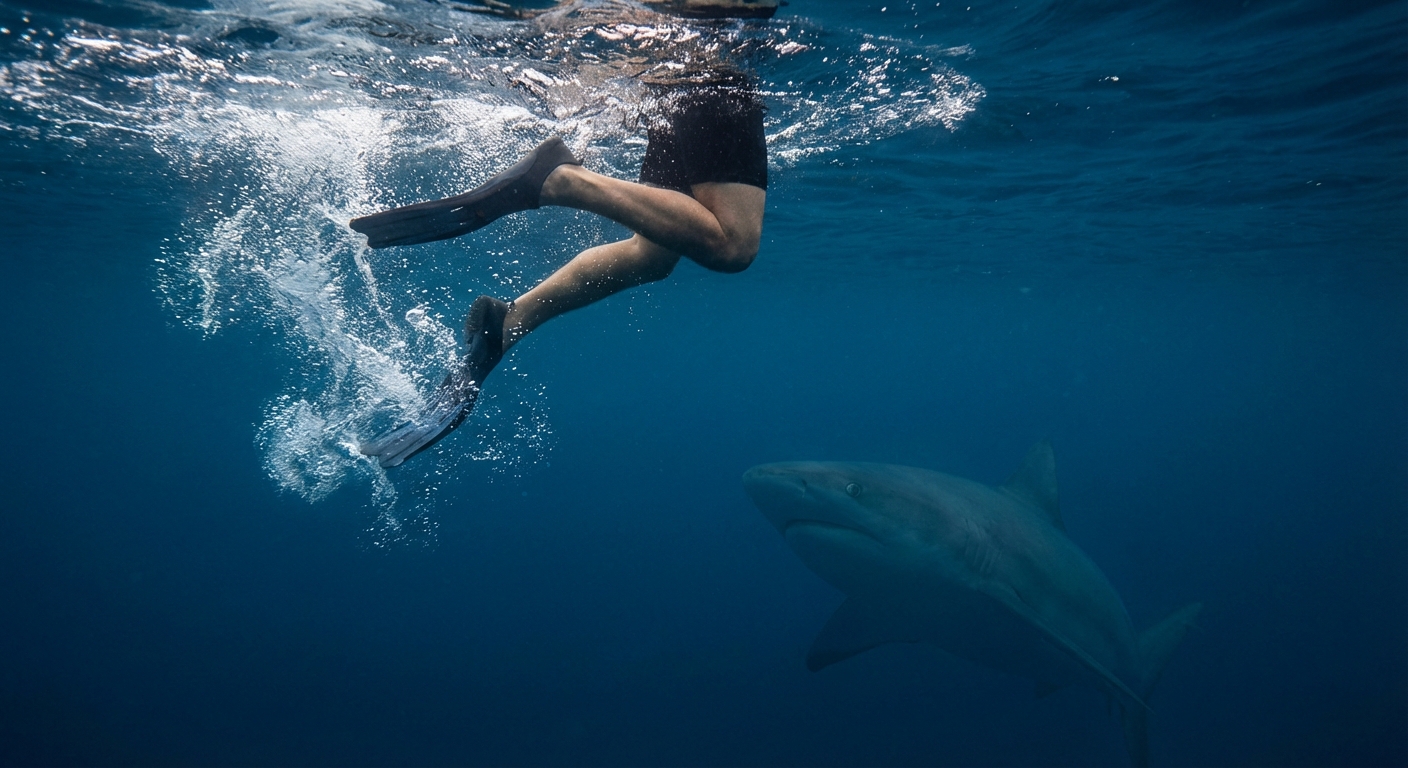
The Hidden Danger Lurking in Your Swimming Technique
You're gliding through the ocean, enjoying the warm water on your skin, completely unaware that your every movement is sending out a dinner bell to one of the ocean's most feared predators. It sounds like the plot of a thriller, but marine biologists have been quietly studying this phenomenon for years—and what they've discovered is both fascinating and deeply unsettling.
Most swimmers have no idea that one seemingly innocent move they make in the water could be the difference between a peaceful swim and an encounter that changes everything.
The Movement That Changes Everything
Here's what researchers have found: it's not about splashing or thrashing around. In fact, the most dangerous swimmers are often the calm, controlled ones.
The culprit? Irregular, erratic hand movements combined with a specific swimming pattern that mimics the distressed movements of injured fish. When you swim with uneven strokes—where one arm moves faster than the other, or when you pause and restart your rhythm unpredictably—you're essentially sending a biological signal that screams "easy meal" to sharks patrolling nearby waters.
Dr. Eugenie Clark, the legendary shark researcher, documented that sharks can detect these irregular patterns from over 200 meters away. They don't see you as a threat. They see you as something wounded. Something vulnerable.
Why Your Instincts Fail You
The terrifying part? Your brain isn't wired to recognize this danger.
When we enter the ocean, we naturally adjust our swimming to account for currents, fatigue, or changing water conditions. We speed up, slow down, pause to reorient ourselves. These micro-adjustments feel completely normal to us. But to a shark's lateral line system—an extraordinary sensory organ that detects vibrations—these movements are unmistakable signs of distress.
Even more alarming: swimmers who are tired or anxious tend to move more erratically. So the very moment when you should be most cautious, your body is actually broadcasting the most dangerous signals.
The Pattern Nobody Talks About
What's particularly chilling is that this doesn't apply equally to all swimmers. Experienced swimmers who maintain consistent, rhythmic strokes rarely trigger this response. Meanwhile, recreational swimmers—especially those who haven't spent much time in the ocean—are unconsciously creating the exact pattern that attracts attention.
Recent studies from the Australian Institute of Marine Science revealed something unexpected: swimmers who maintain a steady, powerful rhythm reduce shark encounters by up to 89%. Not by being faster. Not by being louder. Simply by being predictable.
The sharks aren't hunting the confident swimmers. They're investigating the uncertain ones.
What You Should Know Before Your Next Ocean Swim
If you're planning to swim in shark-inhabited waters—which, realistically, includes most coastal regions—the solution isn't to avoid the ocean. It's to understand the language you're inadvertently speaking.
Maintain consistent, even strokes. Don't pause mid-swim to look around. Swim with purpose and rhythm. Avoid the temptation to slow down when you're nervous; it's counterintuitive, but it makes things worse.
Most importantly: know that this knowledge is rare. The vast majority of beachgoers have never heard this. They're out there right now, swimming with uneven strokes, completely oblivious to what their movements are signaling.
The Bottom Line
The ocean is not your enemy. Neither are sharks. But the gap between understanding how to safely share the water and remaining blissfully ignorant is narrower than you think. One simple adjustment to your swimming technique could mean the difference between a forgettable beach day and a memory that haunts you forever.
The question isn't whether sharks are in the water with you. They probably are. The question is: are you sending the right signals?