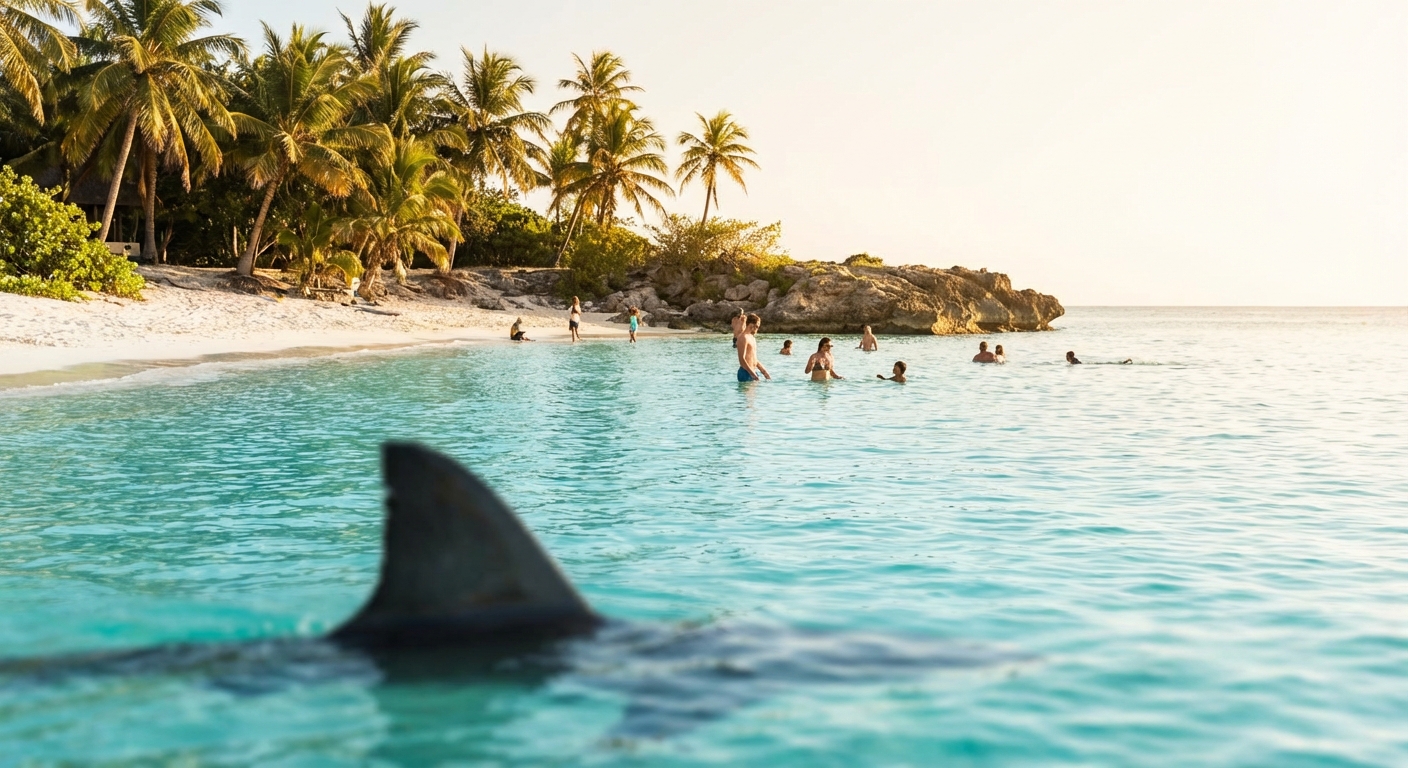
The Paradox Nobody Talks About
Picture this: turquoise waters so clear you can see your toes ten feet down. White sand stretching endlessly. Palm trees swaying in the tropical breeze. The kind of beach that makes you forget your problems exist.
Now picture this: apex predators gliding beneath that same crystalline surface.
Welcome to the contradiction that defines one of the world's most beguiling coastal destinations—a place where paradise and peril coexist in an uneasy balance that locals have learned to navigate, but visitors often don't understand.
The Hidden Reality Beneath the Surface
Social media doesn't tell the full story. Instagram posts show smiling tourists in shallow waters, but they rarely capture what's happening just beyond the reef line. Marine biologists have documented an unusually high concentration of sharks in these waters—species that don't typically approach humans, but are undeniably there.
The numbers are striking. Recent surveys indicate shark sightings have increased by 40% over the past five years in this particular region. Yet the beaches remain open. Lifeguards remain stationed. And locals? They continue swimming.
This isn't recklessness. It's something more complex.
Why Locals Know Something Tourists Don't
The residents of this paradise have developed an unspoken understanding with the ocean. They know:
- When to enter the water (early morning and late afternoon, when sharks are less active)
- Where to avoid (the deeper channels where apex predators hunt)
- How to move (deliberately, without erratic motions that trigger predatory instincts)
- What the ocean is really saying (subtle changes in water color, bird behavior, and current patterns)
It's a knowledge passed down through generations—a literacy of the sea that guidebooks can't teach.
One local fisherman, who's spent 40 years in these waters, put it bluntly: "The sharks were here first. We learned to coexist."
The Tension Nobody Wants to Admit
Here's where it gets uncomfortable: shark attacks in this region remain statistically rare. You're more likely to be struck by lightning than encounter a problem with a shark here. Yet the presence is undeniable. The risk is real, even if microscopic.
This creates a psychological phenomenon that keeps the beach thriving despite the truth. Tourists arrive with vague awareness of the sharks—enough to feel a thrilling edge of danger—but not enough to actually change their behavior. They swim. They enjoy. They leave with stories.
The locals watch this unfold year after year.
What Makes This Beach Different
Unlike other shark-populated beaches that have implemented protective measures—nets, drones, warning systems—this location has resisted heavy intervention. Why?
The answer reveals something profound about risk, culture, and how communities define their relationship with nature.
The ecosystem here depends on apex predators. Remove them, and the entire food chain destabilizes. The coral bleaches. The fish populations collapse. The very beauty that makes the beach paradise begins to fade.
So instead of eliminating the sharks, locals have chosen to coexist. To adapt. To accept the ocean on its own terms.
The Question Nobody's Asking
As climate change shifts shark migration patterns and ocean temperatures rise, this delicate balance is being tested. Some marine scientists predict shark populations in this region could increase 60% within the next decade.
The beaches will likely remain open. Tourists will likely continue visiting. Locals will likely continue swimming.
But for how much longer? And at what point does "rare risk" become "unacceptable risk"?
The paradise hasn't answered these questions yet. And maybe that's precisely why people keep coming back—not despite the sharks, but because of that unanswered question. That edge. That reminder that some places still belong more to nature than to us.
The beach keeps its secrets. The swimmers keep their faith. And the sharks keep their vigil beneath the surface.