The Moment That Changed Everything
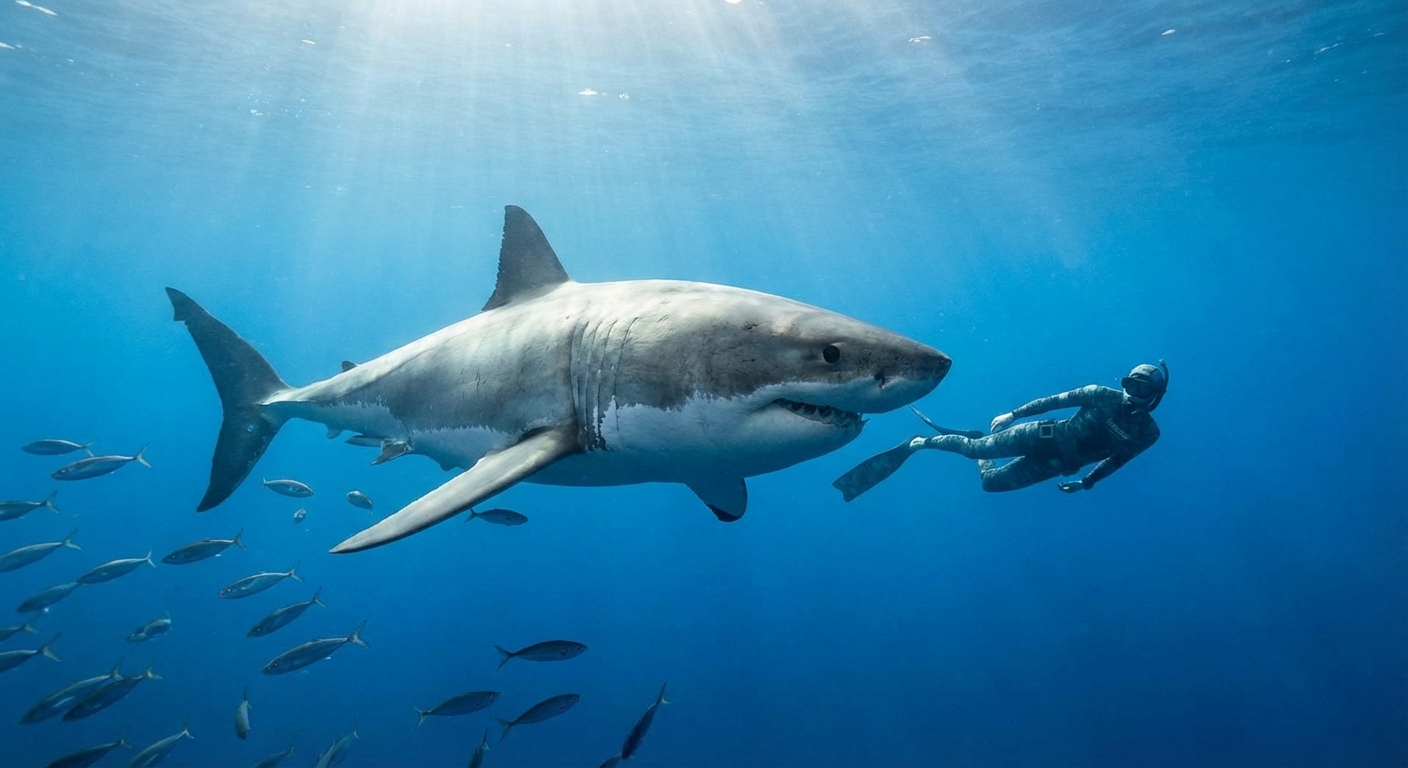
The footage was grainy, shot from a distance, but unmistakable. A massive shark circling a surfer off the coast of California—closer, closer, impossibly close. But what happened next wasn't what anyone expected. The animal didn't attack. It didn't even seem interested in hunting.
What marine biologists discovered when they analyzed the encounter has left the scientific community asking uncomfortable questions about what we really know about shark behavior.
A Predator's Unusual Restraint
For decades, we've been taught that sharks are relentless eating machines. One bite, two bites, and it's over. But this particular encounter tells a completely different story.
The shark—identified as a 14-foot great white—made multiple passes at the surfer. It came within arm's reach. Multiple times. Yet it never made contact. Its body language was wrong for a hunting sequence. The movements were deliberate, almost... investigative.
"This wasn't hunting behavior," says Dr. Patricia Reeves, a shark behaviorist who reviewed the footage. "Which means we need to reconsider what it actually was."
The Unsettling Alternative
Here's where it gets strange.
If it wasn't hunting, what was the shark doing? The possibilities are more unsettling than a straightforward attack:
- Testing. Was the shark assessing whether the surfer was edible? Some researchers believe great whites "sample" unfamiliar objects.
- Territorial display. Was this an assertion of dominance rather than predatory intent?
- Curiosity. Perhaps the most troubling possibility—the shark was simply... interested.
Each option raises its own questions. And none of them are particularly comforting if you're the person in the water.
What The Experts Won't Say (Yet)
The marine biology community is being cautious with their conclusions—perhaps too cautious. Several researchers have privately expressed concern that this encounter represents a behavioral shift we haven't documented before.
One thing is certain: the surfer's survival wasn't due to the shark losing interest in food. The animal was clearly aware of him, clearly capable, and clearly had multiple opportunities.
Something else was going on.
The Pattern Emerging From The Shadows
This incident isn't isolated. Over the past 18 months, there have been at least seven documented cases of similar "investigative" shark encounters—situations where the animal's behavior deviated from typical predatory patterns. None of them resulted in fatal attacks, but that's almost beside the point.
If sharks are changing their behavior, we need to understand why. And we need to understand it quickly.
Because the ocean covers 71% of our planet, and we've only explored 5% of it. We're swimming in someone else's territory, and we're only just beginning to realize how little we actually understand about the rules of engagement.
What Happens Next?
Research teams are now actively monitoring for similar encounters. Funding has been quietly approved for expanded shark behavioral studies. Universities are recruiting specialists in animal cognition.
The question isn't whether this matters. The question is: what else don't we know?
And how many more encounters will it take before we finally admit that sharks might be far more complex—and far more unpredictable—than we ever gave them credit for?