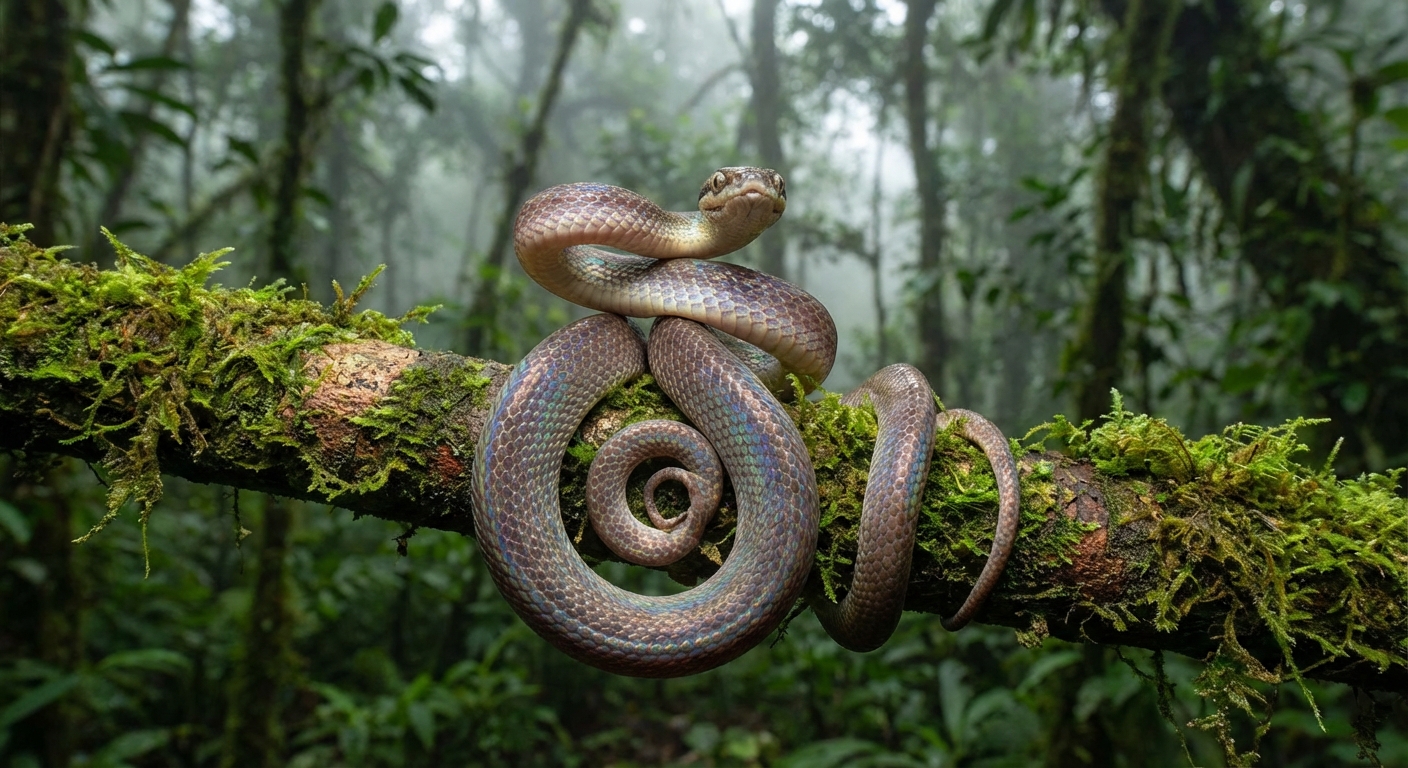
The Mystery That Has Scientists Stumped
For decades, herpetologists have documented thousands of snake species, cataloging their behaviors with scientific precision. They've mapped migration patterns, understood hunting strategies, and explained complex mating rituals. Yet one particular snake species continues to defy every explanation in the scientific literature.
The behavior in question isn't aggressive, nor is it a feeding mechanism. It's something far more peculiar—something that appears deliberate, almost intentional, yet serves no obvious biological purpose.
A Behavior Without Purpose
In recent observations from remote rainforest regions, researchers have recorded a specific snake species engaging in repetitive, cyclical movements that don't align with any known survival strategy. The snake—which we'll refrain from naming for now, as the research remains under peer review—performs these actions in isolated locations, away from food sources, potential mates, or threats.
Here's where it gets stranger:
The behavior occurs at specific times, follows an intricate pattern, and stops abruptly without explanation. When researchers attempt to replicate environmental conditions, the snake sometimes performs the behavior, sometimes doesn't. There's no consistent trigger they've identified.
Dr. Helena Moreno, a leading reptile behaviorist at the Institute of Tropical Biology, described her findings as "genuinely puzzling." In interviews, she admitted: "After 20 years studying snake behavior, this is the first time I've encountered something that doesn't fit our existing frameworks."
The Theories That Fall Short
Experts have proposed numerous explanations:
- Thermoregulation anomaly? No—the snake maintains normal body temperature regardless.
- Stress response? Stress markers don't appear elevated in blood work.
- Neurological quirk? Brain scans show no abnormalities.
- Evolutionary vestige? No ancestral species exhibits similar behavior.
Each theory has been tested and rejected. The behavior persists, unexplained.
Why This Matters
What makes this discovery particularly significant is what it reveals about the limits of our understanding. We've mapped the genome of countless species. We've sent rovers to Mars. Yet a creature sharing this planet with us continues to operate outside our comprehension.
The implications are unsettling for the scientific community. If we don't fully understand fundamental animal behavior in species we've studied for generations, what else are we missing?
The Race Against Time
Here's the critical part: this behavior appears to be declining. Recent surveys suggest the snake population exhibiting this trait has decreased by 40% in just five years. Whether due to habitat loss, climate change, or unknown factors, the window for studying this phenomenon may be closing.
Researchers are now racing to document every instance before the opportunity vanishes entirely. Several universities have launched emergency funding initiatives to support field expeditions.
Some experts worry we may lose the chance to understand this mystery altogether—taking its secrets with it into extinction.
What We Know (And Don't)
The scientific community remains divided. Some researchers believe there's a logical explanation we simply haven't discovered yet. Others suggest the behavior might be more complex than our current analytical tools can measure.
One thing is certain: this snake has become a humbling reminder that nature still holds profound mysteries, even in our well-studied world.
The behavior continues. The questions remain. And the answers? They're still out there, waiting to be found.