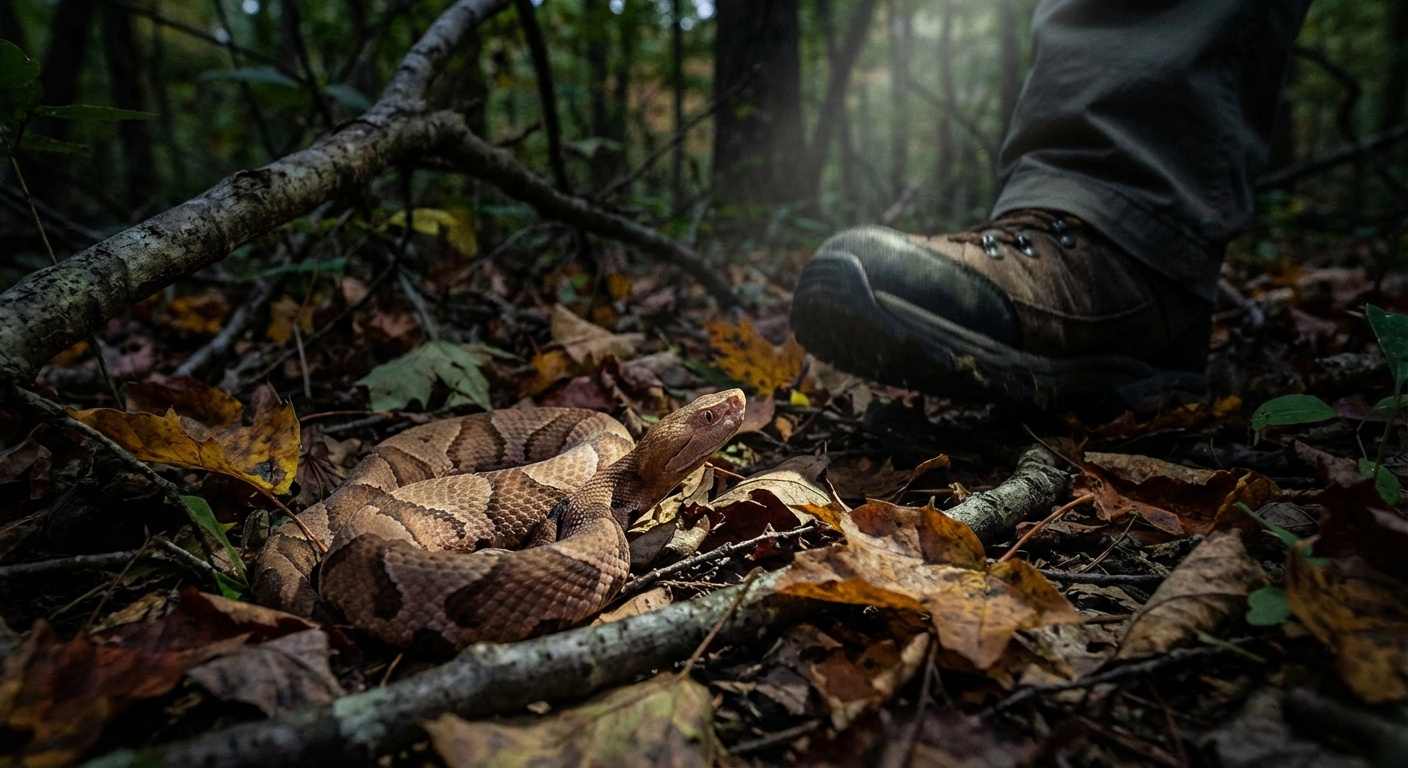
The Moment Everything Changed
Sarah had walked that same trail a hundred times before. Twenty years of morning jogs through the pine forest behind her neighborhood, and she'd never given it a second thought. The path was familiar, safe, predictable—or so she believed.
It was a Tuesday morning in late September when her world tilted on its axis.
A Routine Like Any Other
The sun hadn't fully risen yet. Dew still clung to the grass as she stretched her calves against a weathered fence post. She was alone, as usual. The forest was quiet except for the distant call of cardinals and the soft crunch of gravel beneath her running shoes.
She checked her watch: 6:47 AM. Forty minutes to complete the loop before heading home for coffee. Her mind was already at work—emails to answer, meetings to prepare for. She was barely present in her own body as her feet found their rhythm on the familiar trail.
That's when it happened.
The Encounter
"I never saw it coming," Sarah would later tell investigators, her voice still trembling with the shock of it all.
The snake had been coiled on a low branch, perfectly camouflaged against the mottled bark. A cottonmouth—venomous, aggressive, and territorial. As she jogged past, her arm brushed the branch. The movement triggered an instinctive strike.
What happened next unfolded in fragments:
- The impact: A sharp, burning sensation on her forearm
- The realization: Her eyes finally registered what she'd disturbed
- The silence: A moment of absolute disbelief
- The panic: The understanding that this was real
She didn't scream. Not immediately. There was a strange, surreal quality to the moment—as if her brain couldn't quite process what her body was experiencing.
The Chilling Details
"The worst part wasn't the pain," Sarah explained later. "It was knowing I was alone. That no one knew where I was. That I had maybe minutes to get help."
The venom worked quickly. Within seconds, her arm began to swell. The burning sensation intensified, spreading up toward her shoulder. Her vision blurred at the edges.
She ran—not away from the snake, but toward civilization. Toward help. Toward hope.
The 911 call came in at 6:53 AM. Six minutes had elapsed since the strike. Six minutes that would determine whether she lived or died.
The Race Against Time
Emergency responders found her stumbling along the forest road, her arm grotesquely swollen to twice its normal size. The venom was aggressive, systemic. She was admitted to the nearest trauma center with a diagnosis that chilled the blood of every doctor who examined her:
Severe envenomation with compartment syndrome risk.
The next 48 hours were critical. Antivenom was administered immediately. Multiple doses. Her arm was monitored constantly for the possibility of tissue death. Surgery was prepared for, just in case.
She survived. But the encounter left permanent marks—both visible and invisible.
Why This Matters Now
What makes Sarah's story particularly alarming is how common such encounters are becoming. Herpetologists across the southeastern United States report a disturbing trend: venomous snakes are appearing in residential areas with increasing frequency.
Climate change is altering snake habitats. Urban sprawl is pushing wildlife into unexpected places. And most people—like Sarah—remain dangerously unaware of the risks lurking on familiar paths.
The CDC reports that roughly 7,000 to 8,000 people are bitten by venomous snakes annually in the United States. Most survive. But some don't.
What You Need to Know
If you live in snake country, the warnings are becoming impossible to ignore:
- Never assume a trail is safe just because you've walked it before
- Watch for low branches and ground cover where snakes like to rest
- Wear protective gear when hiking in high-risk areas—especially during warmer months
- Know the symptoms of envenomation: swelling, discoloration, numbness, difficulty breathing
- Identify local species in your area and learn which ones are venomous
The Lasting Impact
Today, Sarah still runs. But she runs differently now. She stays alert. She wears long sleeves and high socks. She carries her phone in her hand, not her pocket.
"I was lucky," she says, her voice steady but subdued. "I could have been alone for hours before someone found me. I could have lost my arm. I could have died."
The snake? It's still out there somewhere on that trail, doing what snakes do. Living. Hunting. Defending itself against perceived threats.
But for Sarah, the forest will never feel quite the same again.
The question that haunts her now isn't whether she'll encounter another snake. It's whether she'll see it coming.