The Moment Everything Changed
You've probably seen thousands of spiders in your lifetime. Most of us barely notice them—a quick glance, maybe a shudder, and we move on with our day. But what if I told you that one seemingly ordinary spider encounter revealed something so unusual that it left scientists genuinely puzzled?
This isn't your typical "creepy spider story." What happened next challenged everything we thought we knew about these eight-legged creatures.
An Ordinary Day Turns Strange
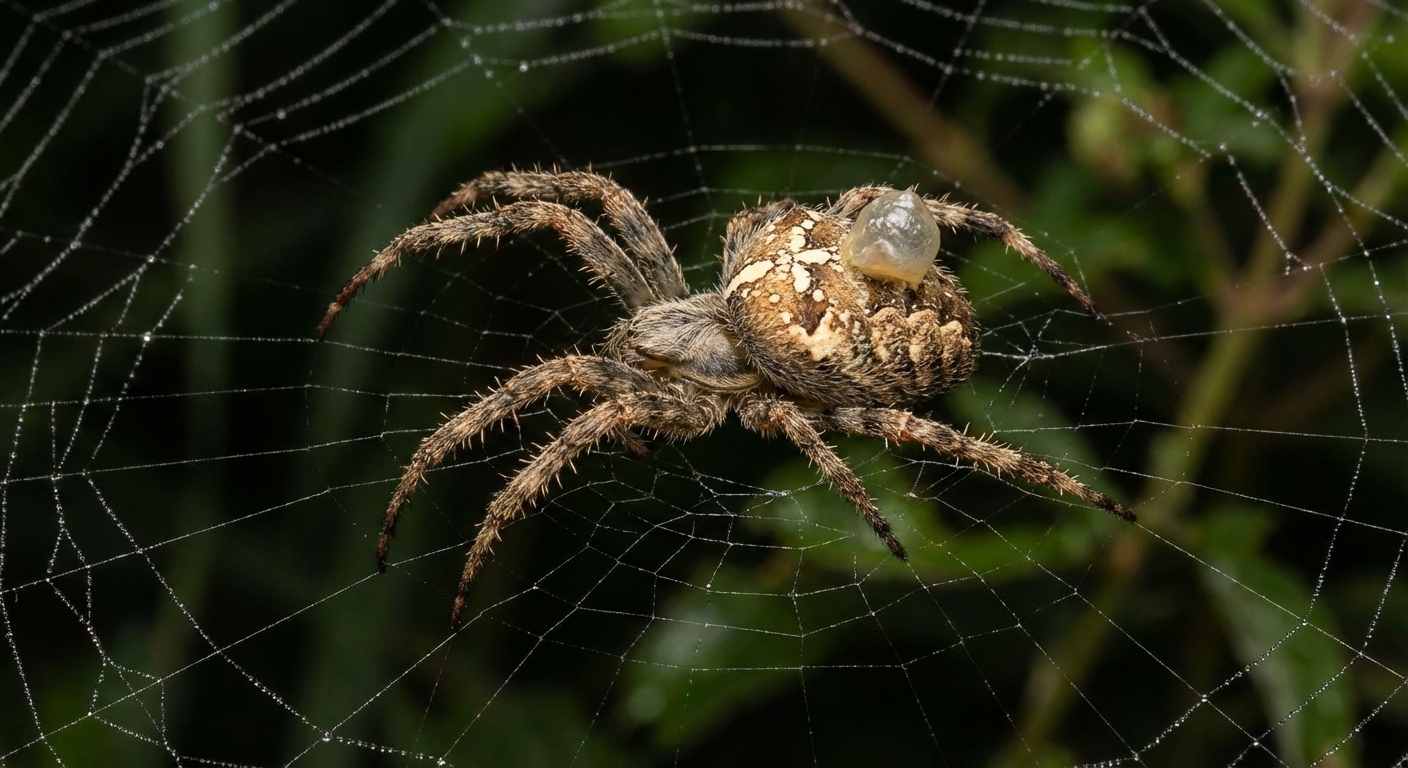
It started like any other afternoon. A homeowner in the Pacific Northwest was tidying up their garage when they spotted it—a spider, nothing remarkable at first glance. Medium-sized, brownish coloring, the kind you'd expect to find in any basement or shed across North America.
They decided to film it. Maybe for social media, maybe just out of curiosity. What they captured in those few seconds would soon circulate across entomology forums, Reddit threads, and wildlife communities worldwide.
The Detail Nobody Expected
As the footage played back, something became immediately apparent. This wasn't just any spider. The way it moved—the rhythm of its movements—was fundamentally different from normal spider behavior.
Spiders typically move with quick, jerky motions, their legs operating in coordinated bursts. But this one? Its movements were almost... synchronized. Unnaturally fluid. Each leg seemed to move in perfect mathematical harmony with the others, creating a pattern that looked almost deliberate.
Entomologists who reviewed the footage couldn't immediately identify the species. And that's when things got interesting.
The Mystery Deepens
Within days, the video had caught the attention of Dr. Sarah Chen, a behavioral arachnologist at the University of Washington. Her initial reaction? Skepticism. But after examining the footage frame-by-frame, she admitted something remarkable: "I've studied spiders for twenty-three years, and I've never seen locomotion patterns quite like this."
The spider's gait suggested one of two possibilities:
- An extremely rare species never properly documented in that region
- A known species exhibiting completely anomalous behavior
Neither option was particularly comforting.
What Made This Different
The unsettling part wasn't just the movement pattern. It was what it implied.
Spiders don't typically deviate from their instinctive movement patterns. Their behavior is hardwired, refined by millions of years of evolution. When a spider moves differently, it usually means:
- Neurological damage from parasites or infection
- Genetic mutation (extremely rare)
- Environmental contamination affecting the nervous system
- An entirely undocumented species
Researchers collected samples from the area. What they found in the soil composition was... unusual. Elevated levels of certain heavy metals, but nothing that would typically cause such dramatic behavioral changes in arachnids.
The Unanswered Questions
Here's what makes this case genuinely unsettling: we still don't have definitive answers.
The spider was never captured for proper laboratory analysis. By the time researchers arrived at the location, it had vanished. Subsequent searches of the area turned up nothing similar. It's as if it simply disappeared.
Since that initial sighting, there have been three additional reports from different locations across the Pacific Northwest describing spiders with eerily similar movement patterns. Three. In less than six months.
Wildlife authorities remain tight-lipped about the findings, citing "ongoing investigation."
What This Could Mean
Arachnologists are divided on the implications. Some suggest it's a previously unknown species adapting to urban environments. Others wonder if environmental changes—pollution, pesticides, climate shifts—might be triggering unprecedented behavioral mutations in common spider species.
The most unsettling possibility? That we're witnessing the early stages of how spiders might evolve in response to human-altered ecosystems. Faster adaptation. Different behaviors. Patterns we don't yet understand.
Why You Should Care
This isn't just about one weird spider. It's about what it represents: a living organism behaving in ways that contradict our understanding of its species.
If spiders can change this dramatically, what does that mean for other creatures we assume we understand? And more pressingly—are there other anomalies like this happening right now, going unnoticed?
The truth is, we're still waiting for answers. The Pacific Northwest's mysterious spider remains one of the year's most perplexing wildlife mysteries.
And somewhere out there, if the reports are accurate, there might be more of them.