The Moment Everything Changed
Scientists have long believed they understood spider behavior. Decades of research, thousands of documented cases, and carefully controlled laboratory studies have painted a comprehensive picture of how these eight-legged creatures operate. But then came the footage that made arachnologists stop in their tracks.
"I had never seen this before," whispered Dr. Marcus Chen, a behavioral biologist with 23 years of field experience, as he watched the high-definition video for the first time. His hands trembled slightly as he rewound the sequence again. What unfolded on screen wasn't just unusual—it challenged fundamental assumptions about spider cognition and social behavior.
When the Expected Becomes Impossible
The discovery happened by accident, as many breakthroughs do. A nature photographer in the Pacific Northwest had set up camera traps in an old-growth forest to capture footage of nocturnal mammals. Instead, something far more extraordinary appeared on the memory cards: a behavior so deliberate, so purposeful, that it seemed almost... calculated.
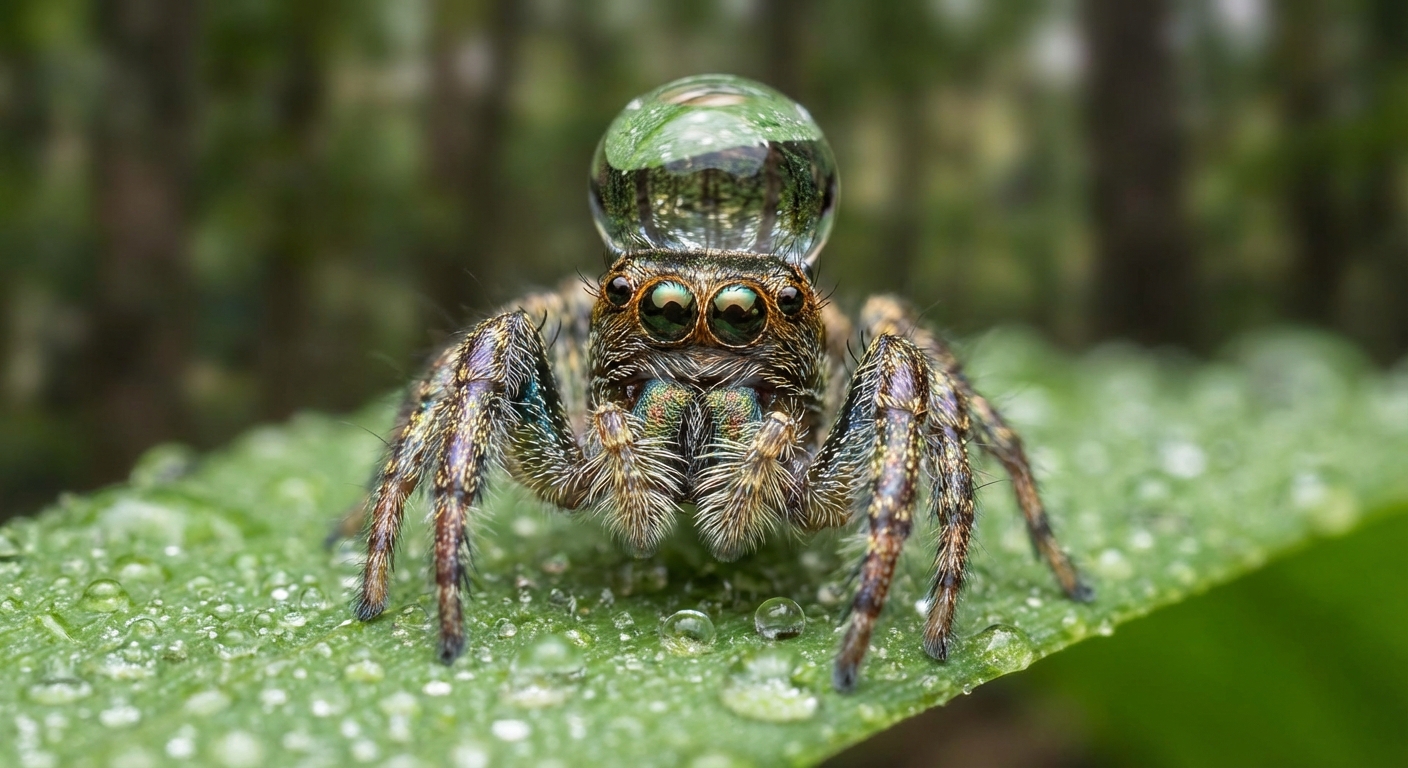
The footage showed a jumping spider engaged in what appeared to be teaching behavior—demonstrating hunting techniques to younger spiders, correcting their movements, and waiting patiently as they practiced. This isn't supposed to happen. Spiders are solitary creatures. They don't nurture. They don't mentor. They certainly don't exhibit anything resembling parental investment beyond laying eggs and moving on.
Yet there it was. Frame after frame of undeniable evidence.
The Unraveling Questions
Researchers who examined the footage were divided. Some insisted it was anomalous—a single, isolated case that couldn't be generalized. Others wondered if we'd been looking at spiders wrong all along. If this behavior existed, what else had we missed?
The tension deepened when additional footage surfaced from other locations. Similar patterns. Different species. The same unmistakable signs of intentional knowledge transfer.
- Could spiders possess more complex cognition than previously believed?
- How many other behaviors have we overlooked?
- What does this mean for our understanding of intelligence in the animal kingdom?
The Implications Nobody Expected
The real unsettling part? This behavior appears to be relatively rare, which raises even more questions. Is it a newly evolved trait? An ancient behavior we somehow never documented? Are certain spider populations smarter than others?
Marine biologists have already begun asking similar questions about octopi and cephalopods. Primatologists continue to discover new tool-use behaviors in apes. But spiders? The creatures we've relegated to the category of "pure instinct"?
The footage challenges everything.
What Happens Next
Universities are scrambling to fund new research initiatives. The original footage has been viewed millions of times, shared across social media platforms, and sparked heated debates in academic circles. Some researchers are reviewing decades of archived wildlife footage, wondering if the signs were always there, hiding in plain sight.
The photographer who captured the original footage remains somewhat bemused by the attention. "I was just trying to get pictures of deer," they said in an interview. "I had no idea I'd accidentally document something that would make scientists question their basic assumptions about an entire class of animals."
What makes this story even more compelling is what we don't know yet. The behavior is still poorly understood. The mechanisms driving it remain mysterious. And perhaps most importantly—we have no idea how widespread this actually is.
The spiders, meanwhile, continue their daily lives, indifferent to the scientific upheaval they've caused.